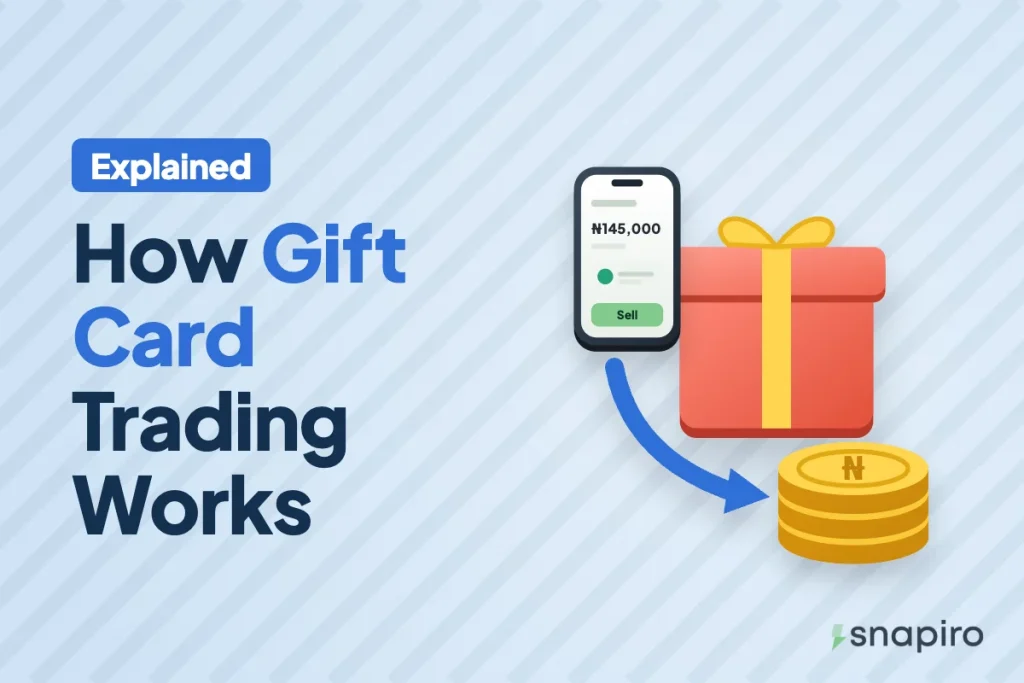
Gift card trading in Nigeria means selling a gift card you can’t or don’t want to use to a buyer who pays you naira for it. The buyer checks the card is real and unused, then pays you.
The price is set as a rate per dollar, pound or euro of the card’s face value. That rate depends on the brand, the country the card came from and whether it’s an e-code or a physical card.
Every trade follows the same few stages, whoever you sell to. Knowing them helps you get paid the right amount, avoid declines, and stay away from the people who make a living stealing gift card codes from sellers.
Why gift cards get sold at all
Most gift cards that end up in Nigeria were bought abroad. A cousin in Houston sends a Steam card for a birthday, a client in London pays a small job with an Apple card, or a foreign friend sends a Google Play code as a thank you.
Two problems follow. Many cards only work in the country where they were bought, so a US card often won’t load onto a Nigerian account. And even when it does, the balance can only be spent in that one store. If you’d rather have money for rent, transport or data, selling the card turns store credit into naira you can actually use.
Who buys gift cards in Nigeria
There are two kinds of buyer.
- Individual traders on WhatsApp, Telegram, Instagram or marketplaces. You send the code, they check it, and they transfer naira to you. The rate is negotiated each time, and you rely on the person’s honesty.
- Platforms such as Snapiro, where you submit the card in an app, the rate is shown before you submit, and a team checks the card and credits your wallet.
The biggest difference is what happens after you give away the code. With a stranger, the code is gone the moment you send it, and there’s nothing you can do if they go quiet. The risks of P2P versus selling through an app are set out in more detail for crypto, and most of them apply to cards too.
How a gift card trade works, step by step
Here’s the full process on Snapiro, which accepts Google Play, Apple (iTunes) and Steam cards. Other brands aren’t accepted.
1. Identify exactly what you have
Three details decide your rate: the brand, the country (shown by the currency, such as USD, GBP or CAD) and the type. An e-code is a code sent by email, text or in an app. A physical card is the plastic card with a scratch-off strip. Get any of these wrong and the trade can be declined.
2. Check the rate before you submit
Gift card rates are quoted per unit of face value, for example a number of naira per US dollar. They change with demand and differ by brand, country and type. Look at the current figure on the gift cards page or in the app first.
3. Submit the card
In the app, tap Sell a gift card and choose the card. Pick the Country, then the Card type. Enter the face value as the Card value; the naira estimate updates as you type. For an e-code, type the full code under E-codes or notes. Upload clear photos of the card, plus the receipt if you have one, then tap Submit card.
Blurry photos are a common reason for delays, so read how to take a clear gift card picture before you upload a physical card.
4. The card is checked
The trade shows as Pending under Activity while the team confirms the code is genuine, unused and matches what you entered. This check is the reason gift card sales aren’t instant the way a crypto sale is: someone has to confirm the balance is really there.
5. You get paid in naira
When the card is approved, the naira goes into your naira wallet and you get a notification. If it’s declined, the notification gives the reason.
You don’t need a PIN or any verification to sell a gift card. You do need a verified BVN or NIN to add a bank account and withdraw. Here’s how to verify your BVN.
How the payout is calculated
Payout is face value multiplied by the rate for that card, country and type. As an example only, with a made-up rate of ₦900 per dollar, a $100 card pays 100 × ₦900 = ₦90,000.
If the confirmed balance is lower than what you entered, say $70 was left on a “$100” card, you’re paid for the $70 at the same rate. The payout guide covers this, and each brand has its own rate explainer, such as how Steam card rates change with country and type.
| What affects the rate | Why it matters |
|---|---|
| Brand | Google Play, Apple and Steam each have their own rate |
| Country or currency | A UK card is priced per pound, a US card per dollar |
| E-code or physical | The two types can have different rates |
| Confirmed balance | You’re paid for what’s actually on the card |
Why trades get declined
Most declines come from a handful of causes: the card was already redeemed, the photo or code can’t be read, the wrong type or currency was chosen, the e-code was missing from E-codes or notes, the card was invalid or never activated at the till, or the same card was submitted twice.
An “already redeemed” decline usually means someone used the code before you sold it. That’s why you should never share a code or a clear photo of it with anyone before you trade. The full list of decline reasons explains what to do for each one.
Scams to watch for
“Send the code first so I can check it.” Once a stranger has the code, they can redeem it in seconds and then say it was already used.
Cards as payment from people you don’t know. Someone offering to pay for your phone or laptop with a gift card may be using a stolen or fake card. If the card is declined, you’ve lost the item.
Fake support accounts. People copy company names and logos on WhatsApp and Instagram, then ask for your code. Snapiro staff never ask for your PIN or password. Read how to tell a real company account from a fake, and before trading a card, learn how to spot a fake or used card.
What to do with the naira
You can withdraw to any bank or wallet on NIBSS, including OPay, Kuda, Moniepoint and PalmPay. The minimum is ₦1,000, each withdrawal costs ₦200, and it’s sent to your bank within 60 seconds of your request.
Or leave it in the app and pay for airtime, data, electricity or TV from your naira balance, with 1% cashback on each payment. All charges are on the fees page.
What readers ask
Is gift card trading legal in Nigeria?
Selling a genuine gift card that you own is ordinary resale. Selling cards bought with stolen money or obtained by fraud is a crime, and so is helping someone cash them out.
How long does a gift card trade take?
It depends on how long the check takes. Clear photos, the right type and currency, and the full code under E-codes or notes all help it go through without back and forth.
Can I sell Amazon, Sephora or other cards on Snapiro?
No. Snapiro accepts Google Play, Apple (iTunes) and Steam cards only.
Should I sell an e-code or a physical card?
Sell whichever you actually have, and pick the matching type in the app. The difference is explained in e-code vs physical gift cards.
Check today’s rate on the gift cards page, then download the Snapiro app to submit your card.