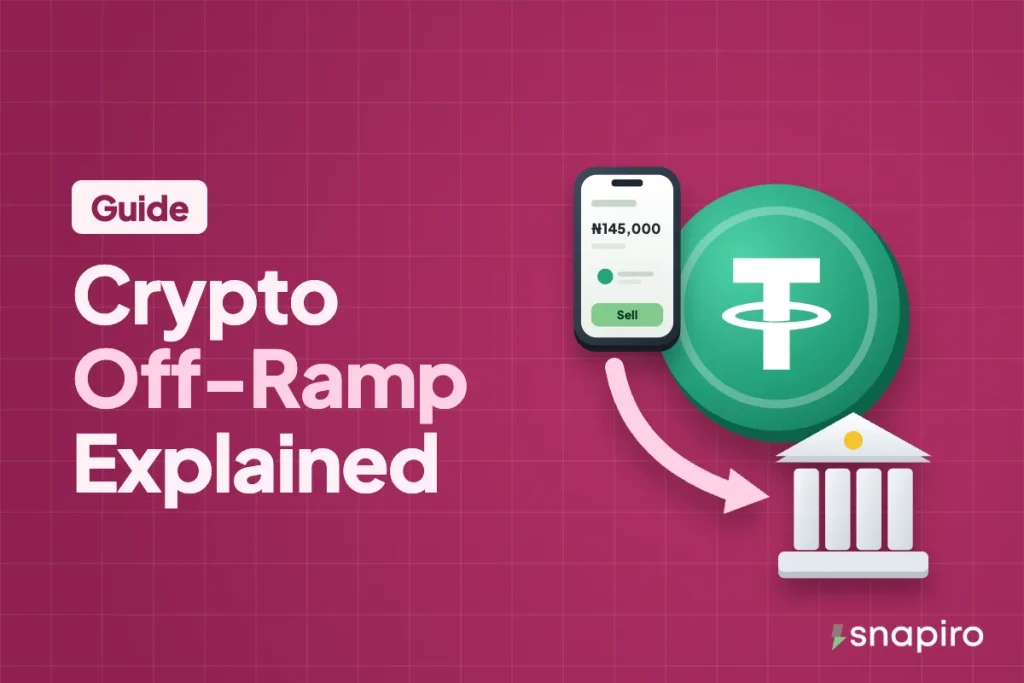
A crypto off-ramp is any service that turns your crypto into regular money you can spend. In Nigeria’s case, that means naira in a bank account you can use like any other.
“On-ramp” is the reverse, getting naira into crypto. When people say they’re “cashing out”, they’re using an off-ramp, whether they call it that or not, and there are a few kinds to pick from.
Off-ramps aren’t all built the same. The difference that matters most is who you’re actually selling to, because that decides your risk, your speed and what can go wrong with your bank account.
The three parts of any off-ramp
- Moving the crypto. You send coins from your wallet or exchange to the off-ramp, on a network it supports.
- The sale. Someone gives you a naira price for the coins and the trade happens.
- Getting the naira out. The money is paid into your bank account or wallet.
Each step has its own cost and its own way to go wrong: the wrong network in step one, a bad rate or a dishonest buyer in step two, a delayed or frozen payment in step three.
The main types of off-ramp in Nigeria
Peer-to-peer (P2P) marketplaces
Many exchanges run a P2P section where you sell to another user. Your coins are held in escrow, the buyer transfers naira to your bank, and you release the coins when the money arrives.
The catch is that you’re dealing with a stranger. Fake payment alerts, pressure to release before money clears, and payments sent from someone else’s account (third-party payments) are common problems. A payment from a stranger’s account linked to fraud can also lead your bank to freeze yours. Weigh up P2P against selling through an app before you pick a route.
Selling through an app
Here you sell through the company’s app, not to another user. You send crypto to your own deposit address in the app, see the naira amount, confirm, and the platform credits your naira balance. There’s no buyer to trust, and the naira comes from the platform rather than from a stranger’s account. This is how Snapiro works.
OTC desks
Over-the-counter desks handle large sales privately. You agree a rate with the desk before sending, rather than selling through the app’s standard screen. They suit people moving big amounts who want a confirmed price and a direct contact. Snapiro’s high volume desk works this way for sales of $20,000 or more per sale, and there’s more on cashing out large amounts in a separate post.
Informal sellers
Then there’s the “my guy” route: a vendor on WhatsApp or Telegram who promises a great rate. You usually send first and hope they pay. It’s where a lot of people lose money, and you have nobody to complain to when it goes wrong.
Comparing the options
| P2P marketplace | Direct to a platform | OTC desk | Informal seller | |
|---|---|---|---|---|
| Who buys your crypto | Another user | The company | The desk | An individual |
| Who sends your naira | The buyer, from their account | The platform | The desk | The individual |
| Main risk | Fake alerts, third-party payments | Wrong network on deposit | Dealing with an unverified desk | Not getting paid at all |
| Suits | Experienced traders | Most everyday sales | Large amounts | Best avoided |
How an off-ramp sale works on Snapiro
You can sell USDT, USDC, BTC, ETH, BNB, TRX, SOL, XRP, LTC, DOGE and TON through the Snapiro app. In the app, you create a deposit address for the coin and network, send your crypto there, then tap Sell Crypto, choose the coin and enter the amount. You see the rate and the naira figure before you confirm with your PIN, and the naira lands in your naira wallet straight away. There’s no separate selling fee because Snapiro’s margin is inside the rate. You can check the rate without an account on the crypto to naira calculator.
From the naira wallet, you can withdraw to any bank or wallet on NIBSS, including OPay, Kuda, Moniepoint and PalmPay. Each withdrawal costs ₦200, the minimum is ₦1,000, and it’s sent within 60 seconds of your request. You need a verified BVN or NIN to add a bank account, and the account name must match your verified name. Or you can pay airtime, data, electricity and TV straight from the naira balance.
Step-by-step guides by coin: USDT, Bitcoin, Ethereum, BNB and TRX, plus USDC, Solana, XRP, Litecoin, Dogecoin and Toncoin.
What to check before you pick an off-ramp
- The naira that reaches your bank. Compare the final amount after the rate, sending fee and withdrawal fee, not just the headline rate.
- Supported coins and networks. Sending on a network the service doesn’t support can mean lost coins.
- Where the naira comes from. Payments from strangers’ accounts are what get bank accounts flagged. Keeping them out is how you sell crypto without getting your account frozen.
- Whether you can reach support. Look for real support channels and a help centre, not just a Telegram handle.
- Whether it asks for your password or PIN. A real service never does.
Is using an off-ramp legal in Nigeria?
Selling crypto you own isn’t banned in Nigeria. The Investments and Securities Act 2025, signed in March 2025, treats digital assets as securities and places crypto exchanges and similar service providers under the supervision of the Securities and Exchange Commission (SEC). Rules for providers continue to develop, so check the SEC’s own announcements for the latest position. This is general information, not legal advice.
Profits from crypto may also be taxable. Keep a record of what you sell, when, and for how much.
Other things people ask
What’s the difference between an on-ramp and an off-ramp?
An on-ramp turns money into crypto. An off-ramp turns crypto into money. Snapiro is an off-ramp only: you sell crypto to it for naira.
Which off-ramp is safest for beginners?
Selling through an app removes the buyer you’d have to trust on P2P. Wherever you sell, start with a small amount and check the network before sending.
Do I need to verify my identity?
On Snapiro you can deposit without verifying. A verified BVN or NIN is needed to sell, add a bank account and withdraw. See what you can do before verifying.
To try it with your own coins, get the Snapiro app and check today’s figure on the USDT page.