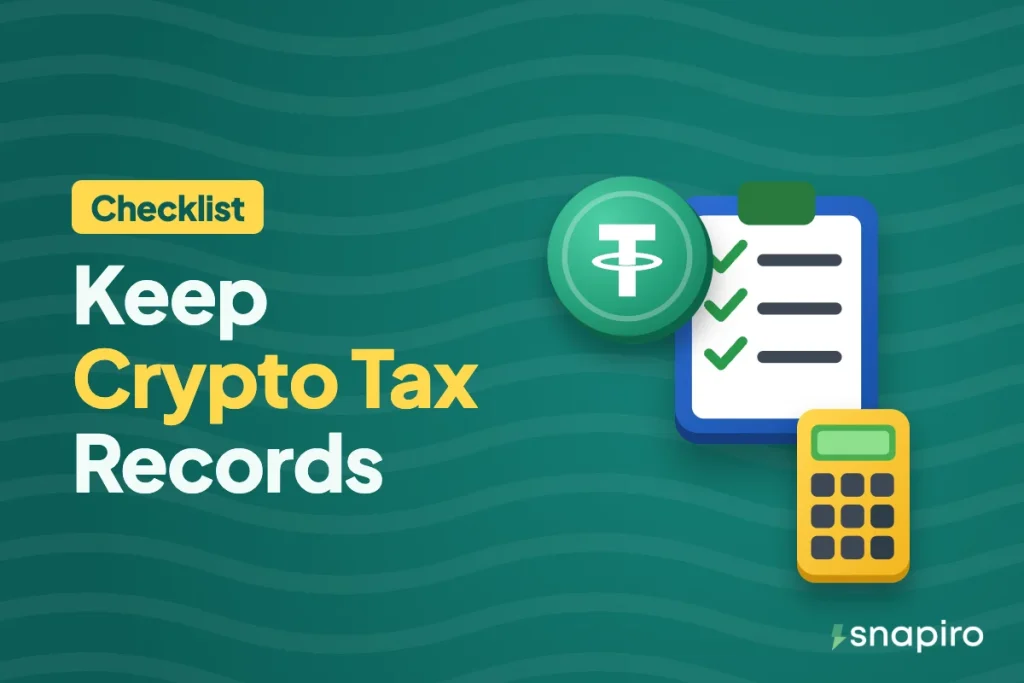
For every crypto transaction, record the date, what happened (received, sold, swapped, moved), the coin and amount, its naira value at that moment, any fees paid and the transaction ID.
Keep those records, with the screenshots and emails behind them, for at least six years after the tax year they relate to. That’s the minimum the Nigeria Tax Administration Act sets for anyone’s books and records.
Since 1 January 2026, digital asset profits are named as taxable, and people active in crypto must keep records and report. Good records show what you actually earned. This is general information for Nigeria, not tax advice.
What the law says about crypto records
- Every person keeps books. Section 31 of the administration Act says everyone, whether or not they owe tax, must keep records with enough detail to work out their tax, in English, for at least six years.
- Crypto activity is spelled out. The Act’s schedule on virtual assets says a person engaged in virtual asset activities must keep records and books under section 31 and report those activities to the tax authority.
- What counts as taxable: selling, exchanging or transferring virtual assets; income from mining or staking; airdrops, bounties and coins received as pay or reward; and payment for goods or services in crypto.
- Value is the market price at the time of the transaction, as set by a recognised exchange the Nigeria Revenue Service approves.
- Losses stay in their lane. Under the Nigeria Tax Act, a loss on digital assets can only be set against gains from digital assets, not against your salary.
When tax actually arises is a separate topic: crypto tax in Nigeria. This one is about the paperwork that supports it.
Why it matters more now
Crypto service providers have their own duty. The administration Act requires a virtual asset service provider to send the tax authority returns showing customers’ transactions: the date, the type and value of the asset, the sale value, and the customer’s name, contact details, Tax ID and NIN. Providers must also keep customer transaction records for at least seven years.
So the tax authority may already hold a record of your sales. Your own records let you show the other half: what each coin cost you, which transfers were just between your own wallets, and which amounts were income versus investment.
There’s a cost to having nothing. Where income can’t be worked out because records weren’t kept properly, the Nigeria Tax Act allows the person to be assessed under a presumptive tax regime set by regulation. Failing to keep records, or to produce them on request, also carries an administrative penalty: ₦10,000 for an individual and ₦50,000 for a company.
The columns to keep
A simple spreadsheet works. One row per transaction:
| Column | Example |
|---|---|
| Date and time | 3 March, 14:10 |
| Type | Received as payment / sold / swapped / moved between own wallets / staking reward |
| Coin and network | USDT, TRC20 |
| Amount | 1,000 |
| Naira value at the time | ₦1,500,000 |
| Rate used and source | ₦1,500/$, exchange or app screen |
| Fees | Network fee, in coin and naira |
| Platform or counterparty | Client name, exchange, wallet |
| Transaction ID | The TxID or hash |
| Note | Invoice number, purpose |
Record transfers between your own wallets too, and mark them clearly. Otherwise a move from your exchange account to your own wallet can look like a sale or a payment.
A worked example
The rates here are examples only. A freelancer is paid 1,000 USDT by a foreign client on 3 March, when the rate is ₦1,500/$. On a plain reading of the schedule, that’s income of ₦1,500,000, recorded on the day it arrives.
On 20 March, the freelancer sells all 1,000 USDT for naira at ₦1,520/$ and receives ₦1,520,000. Compared with the ₦1,500,000 value recorded on receipt, that’s a further gain of ₦20,000. Had the rate dropped to ₦1,480/$, it would be a ₦20,000 loss, usable only against other crypto gains.
The income figure goes into the year’s personal income tax, worked out on the same bands as a salary. The income tax calculator gives an estimate, and our guide to selling USDT paid by foreign clients covers the payment side.
Where to find the evidence
- Exchange and wallet histories. Download or screenshot them regularly. Accounts get closed and apps change.
- Blockchain explorers. The TxID proves when a transfer happened and between which addresses.
- Invoices and contracts for crypto you received as pay.
- Bank statements showing the naira that reached your account.
When you sell USDT or bitcoin on Snapiro, each completed sale shows under Activity, and you get a push notification and an email for it. Keep those emails in a folder. Viewing your transaction history shows where to find each record, and copying a transaction ID covers deposits. Before you sell, the rate calculator shows the naira value at today’s rate.
A routine that takes ten minutes a month
- At month-end, export or screenshot the history from each exchange, wallet and app you used.
- Add each transaction to your spreadsheet, with the naira value on the day.
- Match sales to the naira that hit your bank statement.
- Save everything in one cloud folder named by year.
FAQs
I sold coins I’ve held for years with no records. What now?
Rebuild what you can from exchange histories, old emails, bank statements and blockchain explorers, and note how you got each figure. A tax adviser can help with gaps.
Which cost method should I use when I sold part of my coins?
Pick one consistent method, such as first in, first out, write down which you used, and stick to it. Ask an adviser if your holdings are large.
Who do I report crypto income to?
Individuals living in Nigeria report it with their other income to their state internal revenue service. Companies report to the Nigeria Revenue Service. For how gains are taxed under the new bands, see calculating capital gains.
How long should I keep the records?
At least six years after the tax year they relate to. Keeping them longer does no harm.
Start a folder today for this year’s receipts, statements and TxIDs. Related guides are in the tax in Nigeria section.