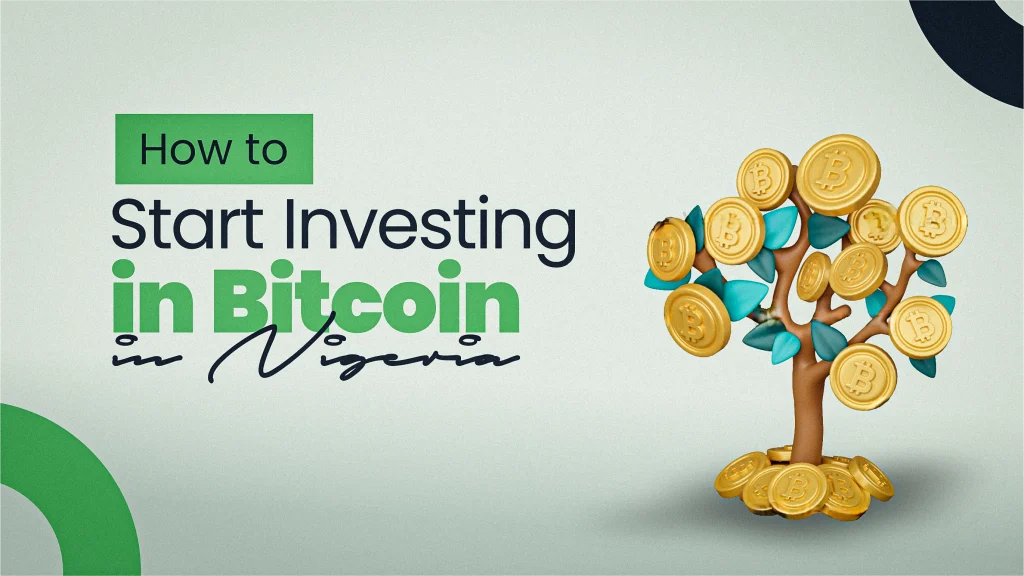
Bitcoin has transformed from an obscure digital experiment to a globally recognized asset class, capturing the attention of investors worldwide.
Bitcoin represents not just an investment opportunity but also a potential hedge against currency volatility and inflation For Nigerians. If you’ve been considering adding Bitcoin to your investment portfolio but aren’t sure where to begin, this comprehensive guide will walk you through the essential steps.
This article covers everything from understanding what Bitcoin is and how it works to practical steps for purchasing, storing, and managing your Bitcoin investments in Nigeria.
Whether you’re looking to make small, regular investments or exploring Bitcoin as a significant part of your portfolio, this guide will help you navigate the cryptocurrency landscape with confidence.
Understanding Bitcoin: The Basics
What is Bitcoin?
Bitcoin is a decentralized digital currency created in 2009 by an anonymous entity using the pseudonym Satoshi Nakamoto. Unlike traditional currencies issued by governments (like the Naira), Bitcoin operates without a central authority or bank.
Instead, it relies on a technology called blockchain, a distributed ledger that records all transactions across a network of computers.
Key Features of Bitcoin
- Limited Supply: There will only ever be 21 million Bitcoins, making it a potentially deflationary asset
- Decentralization: No single entity controls the Bitcoin network
- Pseudonymity: While not completely anonymous, Bitcoin transactions don’t require personal information
- Borderless: Bitcoin can be sent anywhere in the world without traditional banking restrictions
- Divisibility: Bitcoin can be divided into smaller units (the smallest unit is called a “satoshi,” equivalent to 0.00000001 BTC)
Why Are Nigerians Investing in Bitcoin?
Bitcoin has gained popularity in Nigeria for several compelling reasons:
- Hedge Against Inflation: With Nigeria’s history of inflation, Bitcoin offers an alternative store of value not tied to the local economy
- Remittance Alternative: Bitcoin provides a faster and often cheaper way to receive money from abroad compared to traditional remittance services
- Financial Inclusion: Bitcoin allows access to financial services for the unbanked or underbanked population
- Portfolio Diversification: Cryptocurrency offers an asset class with different risk profiles than traditional investments
- Value Appreciation: Despite volatility, Bitcoin has shown significant long-term growth potential
The Regulatory Landscape for Bitcoin in Nigeria
Before investing, it’s important to understand the regulatory environment surrounding Bitcoin in Nigeria.
Central Bank of Nigeria (CBN) Stance
In February 2021, the CBN issued a circular prohibiting banks and financial institutions from facilitating cryptocurrency transactions. However, this doesn’t make Bitcoin ownership illegal – it simply restricts how it can be purchased and sold through traditional banking channels.
Securities and Exchange Commission (SEC) Position
The Nigerian SEC has recognized digital assets and has been working on a regulatory framework for cryptocurrencies. They’ve classified cryptocurrencies as securities, indicating a move toward regulation rather than prohibition.
Legal Status
As of now, owning and trading Bitcoin remains legal in Nigeria, though the methods of purchase and sale have adapted to regulatory constraints. Peer-to-peer (P2P) trading has become the dominant method for Nigerians to buy and sell Bitcoin.
Getting Started with Bitcoin Investment in Nigeria
Step 1: Educate Yourself
Before investing any money, take time to understand Bitcoin fundamentals:
- Research Bitcoin’s technology, history, and use cases
- Understand market cycles and Bitcoin’s price volatility
- Learn basic security practices for cryptocurrency
- Follow reputable sources for cryptocurrency news and analysis
Recommended Resources for Nigerian Beginners:
- Books: “Mastering Bitcoin” by Andreas Antonopoulos
- Websites: Bitcoin.org, Coindesk, Binance Academy
- Local Communities: Cryptocurrency Nigeria Group, Blockchain Nigeria User Group
- YouTube Channels: 99Bitcoins, Coin Bureau
Step 2: Set Your Investment Goals
Define clear objectives for your Bitcoin investment:
- Are you investing for short-term gains or long-term growth?
- What percentage of your portfolio will you allocate to Bitcoin?
- What’s your risk tolerance and investment timeline?
- Will you use a lump-sum approach or dollar-cost averaging (regular small purchases)?
Step 3: Choose a Secure Bitcoin Wallet
A cryptocurrency wallet is essential for storing your Bitcoin. There are several types to consider:
Mobile Wallets:
- Trust Wallet
- Binance Wallet
- Coinomi
- BRD Wallet
Hardware Wallets (Most Secure Option):
- Ledger Nano S/X
- Trezor
- KeepKey
Desktop Wallets:
- Electrum
- Exodus
- Bitcoin Core
Paper Wallets:
- Cold storage option for long-term holdings
Security Best Practices:
- Never share your private keys or recovery phrases
- Enable two-factor authentication where available
- Keep your wallet software updated
- Consider a combination of “hot” wallets (connected to the internet) for small amounts and “cold” storage (offline) for larger holdings
Step 4: Choose a Method to Purchase Bitcoin
Given the CBN restrictions, Nigerians have several alternative methods to purchase Bitcoin:
Peer-to-Peer (P2P) Exchanges
P2P platforms connect buyers and sellers directly:
- Binance P2P: Offers multiple payment methods and escrow protection
- Paxful: Wide range of payment options including bank transfers, gift cards, and mobile money
- LocalBitcoins: One of the oldest P2P platforms with established reputation
- Remitano: Popular in Nigeria with escrow service
Cryptocurrency Exchanges with Nigerian Presence
Some international exchanges cater specifically to Nigerian users:
- Quidax: Nigeria-based exchange with multiple cryptocurrency options
- BuyCoins: Offers direct crypto purchases and P2P trading
- Bundle Africa: Social payments app with cryptocurrency features
- Luno: Established exchange with strong presence in Nigeria before restrictions
Bitcoin ATMs
Limited but growing in availability in major Nigerian cities.
In-Person Transactions
Trading through established local communities and meetups (requires experience and caution).
Step 5: Make Your First Purchase
Once you’ve selected your preferred method:
- Create an account on your chosen platform
- Complete verification (KYC requirements vary by platform)
- Connect your payment method (bank transfer, mobile money, etc.)
- Place an order specifying how much Bitcoin you want to buy
- Complete the transaction following the platform’s process
- Transfer your Bitcoin to your personal wallet (don’t leave large amounts on exchanges)
Step 6: Develop a Storage and Security Strategy
Proper storage is crucial for protecting your Bitcoin investment:
- Hot Wallets: For small amounts you might need to access quickly
- Cold Storage: For larger holdings and long-term investments
- Backup Strategy: Store recovery phrases/private keys in multiple secure locations
- Inheritance Planning: Consider how loved ones could access your Bitcoin if something happened to you
Step 7: Create an Investment Strategy
Successful Bitcoin investors typically follow structured approaches:
Dollar-Cost Averaging (DCA)
Invest a fixed amount at regular intervals regardless of price. This strategy helps mitigate volatility and reduces the stress of timing the market.
Example: Investing ₦10,000 in Bitcoin every two weeks regardless of price.
Lump-Sum Investment
Investing a larger amount at once. This can be advantageous if you believe Bitcoin is currently undervalued but carries higher timing risk.
Portfolio Allocation
Determine what percentage of your investment portfolio should be in Bitcoin. Financial advisors often suggest limiting high-risk investments like cryptocurrency to 5-10% of your total portfolio.
Managing Your Bitcoin Investment
Tracking Your Investment
Stay informed about your investment performance using:
- Portfolio tracking apps (Blockfolio, CoinStats, Delta)
- Price alert services
- Regular portfolio reviews
Tax Considerations
While cryptocurrency taxation in Nigeria is still evolving, prepare for potential future regulation:
- Keep detailed records of all purchases, sales, and transfers
- Document the Naira value of transactions at the time they occurred
- Consider consulting with a tax professional familiar with cryptocurrency
Recognizing and Avoiding Scams
The cryptocurrency space attracts numerous scams. Protect yourself by:
- Avoiding investments promising guaranteed returns
- Being skeptical of investment schemes requiring recruitment of others
- Researching thoroughly before investing in any project
- Never sharing your private keys or recovery phrases
- Verifying website URLs carefully before entering credentials
Advanced Bitcoin Investment Strategies
Once you’ve mastered the basics, you might consider more advanced approaches:
Bitcoin Savings Programs
Some platforms offer interest-bearing accounts for Bitcoin holdings.
Bitcoin Mining
While typically requiring significant investment in hardware and electricity, mining can be an alternative way to acquire Bitcoin.
Trading Bitcoin
For those with market experience, trading between Bitcoin and other cryptocurrencies can potentially increase returns (but also carries higher risk).
Diversification
Consider diversifying into other cryptocurrencies alongside Bitcoin.
The Future of Bitcoin in Nigeria
Despite regulatory challenges, Bitcoin adoption continues to grow in Nigeria:
- Remittance Market: Bitcoin offers competitive advantages for international transfers
- Financial Innovation: Local startups are building Bitcoin-based solutions for Nigeria’s unique challenges
- Investment Alternative: As traditional investment vehicles face challenges, Bitcoin provides an alternative
- Regulatory Evolution: The regulatory landscape continues to develop, potentially opening more opportunities
Expert Insights
“Bitcoin presents a unique opportunity for Nigerians to participate in a global financial system without traditional barriers to entry. With proper education and risk management, it can be an important part of a diversified investment portfolio.”
- Financial analyst at a leading Nigerian investment firm
“The key to successful Bitcoin investing is patience and consistency. The market will experience volatility, but historical performance suggests long-term value for those who can withstand the fluctuations.”
- Cryptocurrency educator from Blockchain Nigeria User Group
Frequently Asked Questions
Is Bitcoin legal in Nigeria?
How much money do I need to start investing in Bitcoin?
Is Bitcoin safe?
How volatile is Bitcoin?
Can I lose all my money investing in Bitcoin?
How do I convert my Bitcoin back to Naira?
What are the fees associated with Bitcoin transactions?
Conclusion
Investing in Bitcoin in Nigeria offers both opportunities and challenges. The cryptocurrency presents a unique investment avenue with potential benefits of portfolio diversification, protection against inflation, and participation in a revolutionary financial technology.
By following the steps outlined in this guide—educating yourself, selecting appropriate wallets and exchanges, implementing security measures, and developing a thoughtful investment strategy—you can begin your Bitcoin investment journey with confidence.
Remember that Bitcoin, like any investment, carries risks. Price volatility, regulatory changes, and security concerns require ongoing attention and risk management. Start with small investments, continue learning, and gradually increase your exposure as your knowledge and comfort level grow.