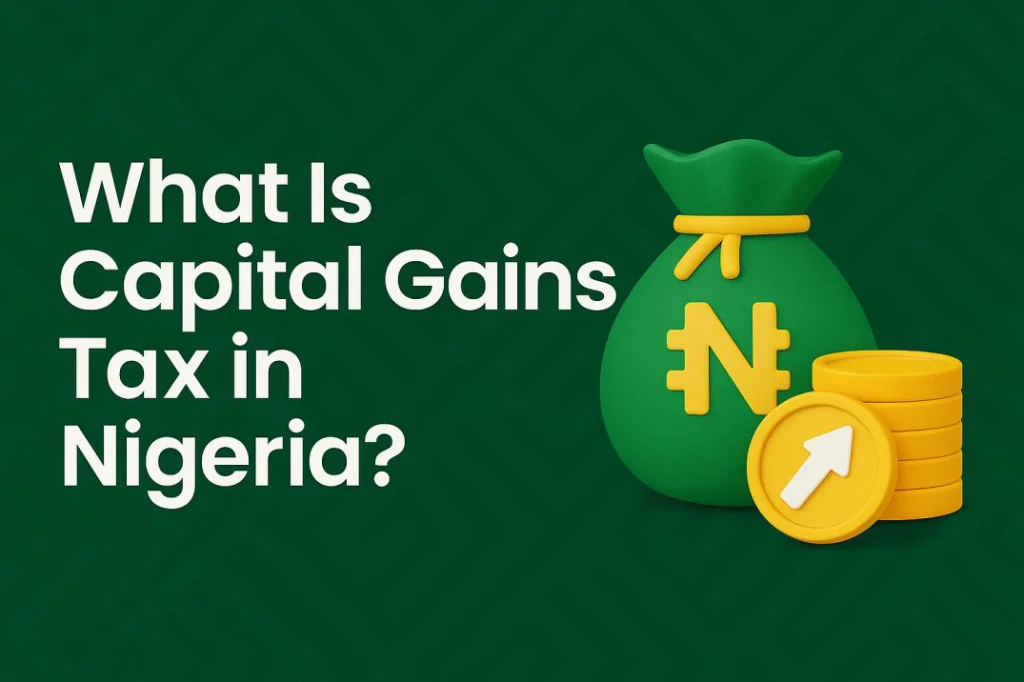
Capital Gain Tax (CGT) is a tax you pay on the profit you make when you sell an asset at a price higher than what you originally bought it. It is not charged on the entire selling price, only on the gain (profit).
CGT in Nigeria is guided by the Capital Gains Tax Act (Cap C1 LFN 2004) and the current tax rate is 10%.
So for example:
If you bought a plot of land for ₦4,000,000 and later sold it for ₦7,500,000, your gain is ₦3,500,000.
The capital gain tax is 10% of that ₦3,500,000.
That means: CGT payable = ₦350,000.
This is the basic idea people must understand, CGT is not about the whole sale price, but the excess (profit) you made.
Assets that Attract Capital Gain Tax
CGT applies to assets that appreciate in value. Common examples in Nigeria include:
- Land and buildings
- Shares and securities
- Business assets
- Intellectual property rights
- Machinery used in business
Whenever you transfer ownership of something valuable and you make profit on that transfer — CGT may apply.
How to Calculate Capital Gain Tax
Calculation is straightforward:
Selling Price – Purchase Cost = Capital Gain
Capital Gain × 10% = CGT payable
If there were improvement expenses (like renovation or fencing land before selling), those can sometimes be deducted before final gain calculation, provided you have proper evidence/receipts.
Exemptions Under Nigerian CGT Law
The law gives some exemptions. CGT may not apply in these situations:
- Transfer of asset between husband and wife
- Gifts to close family members (if without commercial value)
- Compensation for loss, injury or damage
- Gains used to buy another home within the same year
- Small gains from share disposal below threshold (subject to Finance Act updates)
This is why not every sale automatically triggers CGT, intent and circumstance matter.
Who Collects Capital Gain Tax in Nigeria?
Collection depends on the type of taxpayer:
- Individuals: State Internal Revenue Service (SIRS)
- Companies: Federal Inland Revenue Service (FIRS)
Many Nigerians don’t know this, but CGT is often requested before tax clearance is issued, especially for real estate transactions or major asset disposals.
Due Date for Payment
CGT is supposed to be paid not later than 30 days after the asset is sold.
Delay attracts penalties and interest, and it can even affect company remittances later.
CGT and Real Estate
Land flipping is one of the biggest triggers of CGT in Nigeria.
People buy land at ₦2 million, sell at ₦10 million, pocket profit, and assume no tax applies.
But under the law, that ₦8 million gain should attract 10% CGT.
CGT and Shares
When someone trades shares and makes profit (gain on disposal), CGT can apply, but the Finance Acts in recent years introduced some thresholds and exemptions for small retail trades.
So share traders need to know whether their volume qualifies.
Why Government Collects Capital Gain Tax
Government uses CGT to:
- widen the tax revenue base
- capture wealth transactions
- ensure gains on assets are not totally tax free
It is one of the ways government collects revenue from wealth creation, not from salary.
Summary
Capital Gain Tax is a 10% tax on profit you make from selling an asset such as land, buildings, shares or business property in Nigeria.
It is payable within 30 days of the sale and has some exemptions depending on the transaction type.
For investors, compliance is important, because FIRS and State IRS now use valuation and evidence-trail to demand CGT before approving tax clearance.